Nonprofit Organization Interstate Movers
A nonprofit relocation is measured by uninterrupted service, responsible stewardship, and community trust—not simply by how quickly desks arrive. Donated goods, restricted-grant assets, client records, program supplies, volunteer labor, leased equipment, and public commitments may each carry different rules. A sound interstate plan connects the move budget to mission priorities and makes every custody, disposal, and schedule decision visible to accountable leaders.
This guide is for charities, foundations, associations, faith-adjacent service groups, advocacy organizations, food and clothing programs, and community-development teams. It addresses program inventory, donor-funded equipment, confidential beneficiary records, fundraising files, event materials, furniture, technology, signage, and volunteer supplies. Best Movers Nationwide is a referral and information platform, not a carrier; independent providers perform any quoted transportation.
Table of Contents
- Define Mission-Critical Service Levels
- Trace Ownership and Funding Restrictions
- Inventory Program Stock Honestly
- Protect Beneficiary and Donor Data
- Use Volunteers Where They Add Value
- Build a Transparent Move Budget
- Plan Stakeholder Communication
- Evaluate Providers Through a Stewardship Lens
- Prepare an Accessible Destination
- Move in Mission-Based Waves
- Reconcile Grants, Donations, and Assets
- Report Outcomes and Lessons
- Frequently Asked Questions
Define Mission-Critical Service Levels
List programs that cannot pause, those that can operate remotely, and those that can close temporarily with notice. Set a maximum tolerated interruption and identify the people, supplies, data, phones, and spaces required to meet it.
Use this service map to determine move waves. A hotline, food distribution, clinic partnership, shelter intake, or grant deadline may need a continuity kit and alternate site while administrative furniture follows later.
Stewardship makes this more than a logistics checkpoint. Program, finance, development, volunteer, privacy, and facilities leaders should document how define mission-critical service levels protects services and complies with asset restrictions. Confirm who approves spending or disposition, which community commitments remain active, how accessible service continues, and what evidence belongs in the grant, donor, or board record.
Trace Ownership and Funding Restrictions
Mark whether each asset is owned, leased, donated for a stated purpose, purchased with restricted funds, held for a beneficiary, or subject to return. Consult grant agreements, donor terms, leases, and accounting records before disposal or transfer.
A mover can carry an approved item but cannot decide whether the nonprofit may relocate, sell, or discard it. Assign finance and program leaders to approve disposition and preserve the evidence needed for audits.
Stewardship makes this more than a logistics checkpoint. Program, finance, development, volunteer, privacy, and facilities leaders should document how trace ownership and funding restrictions protects services and complies with asset restrictions. Confirm who approves spending or disposition, which community commitments remain active, how accessible service continues, and what evidence belongs in the grant, donor, or board record.
Inventory Program Stock Honestly
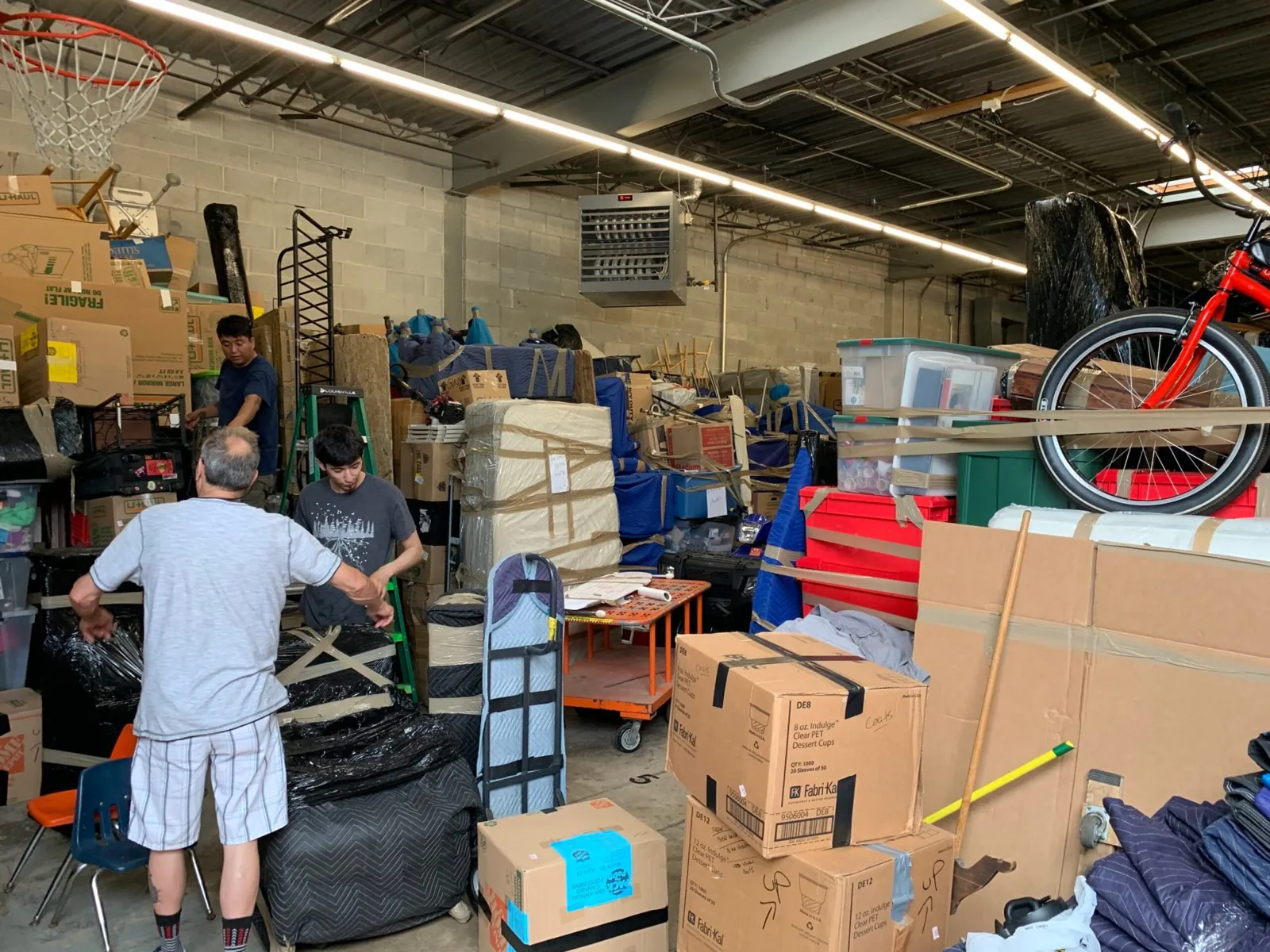
Count usable supplies by category, condition, expiration date, destination, and handling need. Separate active program inventory from recycling, secure destruction, donation to another organization, and waste.
Avoid paying interstate freight on low-value or expired goods simply because no one owns the decision. At the same time, do not discard restricted or donated materials without authorization. Record every approved pathway.
Stewardship makes this more than a logistics checkpoint. Program, finance, development, volunteer, privacy, and facilities leaders should document how inventory program stock honestly protects services and complies with asset restrictions. Confirm who approves spending or disposition, which community commitments remain active, how accessible service continues, and what evidence belongs in the grant, donor, or board record.
Protect Beneficiary and Donor Data
Identify paper and electronic records containing personal, health, financial, immigration, donor, employee, or case information. Set access classes, coded labels, sealed-container rules, device controls, and secure-destruction boundaries.
Limit volunteer involvement where confidentiality requires trained or authorized personnel. Keep the code key and master inventory with staff. Report seal, access, or device incidents through the organization’s privacy process.
Stewardship makes this more than a logistics checkpoint. Program, finance, development, volunteer, privacy, and facilities leaders should document how protect beneficiary and donor data protects services and complies with asset restrictions. Confirm who approves spending or disposition, which community commitments remain active, how accessible service continues, and what evidence belongs in the grant, donor, or board record.
Use Volunteers Where They Add Value
Volunteers can assemble boxes, label public materials, prepare destination welcome kits, and support communications when tasks are clearly scoped and supervised. Heavy lifting, driving, confidential packing, technical disconnection, and hazardous materials need appropriate professionals.
Schedule shifts with check-in, training, protective equipment, task cards, breaks, and a staff lead. Good intentions do not replace safe methods or insurance. Never pressure volunteers to accept work beyond their ability.
Stewardship makes this more than a logistics checkpoint. Program, finance, development, volunteer, privacy, and facilities leaders should document how use volunteers where they add value protects services and complies with asset restrictions. Confirm who approves spending or disposition, which community commitments remain active, how accessible service continues, and what evidence belongs in the grant, donor, or board record.
Build a Transparent Move Budget
Separate carrier charges, packing, specialty vendors, technology, storage, insurance, build-out, staff time, communication, disposal, and contingency. Connect each cost to a mission or risk outcome so leadership can make responsible tradeoffs.
Compare written estimates on the same inventory and access facts. Record board or executive approvals at the required threshold and route restricted funds only to eligible expenses confirmed by the nonprofit’s finance advisers.
Stewardship makes this more than a logistics checkpoint. Program, finance, development, volunteer, privacy, and facilities leaders should document how build a transparent move budget protects services and complies with asset restrictions. Confirm who approves spending or disposition, which community commitments remain active, how accessible service continues, and what evidence belongs in the grant, donor, or board record.

Plan Stakeholder Communication
Create distinct messages for clients, donors, volunteers, partners, vendors, staff, regulators, and the public. State which services change, what stays open, dates, temporary contacts, accessibility information, and where urgent needs should go.
Protect privacy while being transparent. Do not publish security-sensitive staging details or imply that a referral platform is the carrier. Update directories, grant contacts, licenses, donation instructions, and emergency partners.
Stewardship makes this more than a logistics checkpoint. Program, finance, development, volunteer, privacy, and facilities leaders should document how plan stakeholder communication protects services and complies with asset restrictions. Confirm who approves spending or disposition, which community commitments remain active, how accessible service continues, and what evidence belongs in the grant, donor, or board record.
Evaluate Providers Through a Stewardship Lens
Verify legal identity, authority, insurance, service scope, subcontracting, worker supervision, claims procedure, and experience with the organization’s actual assets. Ask how the provider handles confidential records, donated inventory, and occupied community sites.
Price matters, but a low bid that excludes packing, stairs, waiting, storage, or required security is not economical. Present comparable totals and risks to the authorized decision makers.
Stewardship makes this more than a logistics checkpoint. Program, finance, development, volunteer, privacy, and facilities leaders should document how evaluate providers through a stewardship lens protects services and complies with asset restrictions. Confirm who approves spending or disposition, which community commitments remain active, how accessible service continues, and what evidence belongs in the grant, donor, or board record.

Prepare an Accessible Destination
Confirm ramps, elevators, restrooms, door clearances, signage, public transit information, parking, sensory considerations, and program-room readiness. Accessibility must function during setup, not begin after opening day.
Map each destination zone to a program owner. Install storage, network access, safety equipment, and public-facing essentials before delivery. Keep moving activity separated from clients whenever practical.
Stewardship makes this more than a logistics checkpoint. Program, finance, development, volunteer, privacy, and facilities leaders should document how prepare an accessible destination protects services and complies with asset restrictions. Confirm who approves spending or disposition, which community commitments remain active, how accessible service continues, and what evidence belongs in the grant, donor, or board record.
Move in Mission-Based Waves
Sequence continuity kits and launch supplies first, core program stock second, administrative assets third, and archives or low-use inventory when the receiving team is ready. The exact order should follow program need.
Use color or coded zones without exposing beneficiary details. Conduct departure counts and arrival acceptance by wave. Pause if the destination cannot secure or use the next load.
Stewardship makes this more than a logistics checkpoint. Program, finance, development, volunteer, privacy, and facilities leaders should document how move in mission-based waves protects services and complies with asset restrictions. Confirm who approves spending or disposition, which community commitments remain active, how accessible service continues, and what evidence belongs in the grant, donor, or board record.

Reconcile Grants, Donations, and Assets
At delivery, verify unit counts, condition, asset tags, donor or grant categories, leased equipment, and program destinations. Send exceptions to finance and program owners rather than silently substituting items.
Photograph damage, retain packaging, and follow provider claim procedures. Update fixed-asset and inventory systems only after responsible staff confirm receipt and location.
Stewardship makes this more than a logistics checkpoint. Program, finance, development, volunteer, privacy, and facilities leaders should document how reconcile grants, donations, and assets protects services and complies with asset restrictions. Confirm who approves spending or disposition, which community commitments remain active, how accessible service continues, and what evidence belongs in the grant, donor, or board record.
Report Outcomes and Lessons
Close the project with a concise account of spending, service interruption, disposed or transferred property, incidents, volunteer participation, and unresolved claims. Share the level of detail appropriate to board, funder, and public audiences.
Record what improved or harmed mission delivery. Update continuity plans, vendor standards, inventory rules, and future grant budgets so the move leaves the organization stronger.
Stewardship makes this more than a logistics checkpoint. Program, finance, development, volunteer, privacy, and facilities leaders should document how report outcomes and lessons protects services and complies with asset restrictions. Confirm who approves spending or disposition, which community commitments remain active, how accessible service continues, and what evidence belongs in the grant, donor, or board record.
Moving Network & Trusted Resources
Explore related moving resources from our network: JM Moving, Nashville Packers and Movers, Miami Packers and Movers, and Packers and Movers Augusta. These are separate websites and businesses; verify the provider, service area, credentials, estimate, and contract before booking. Best Movers Nationwide remains a referral and comparison platform, not a motor carrier.
\nFrequently Asked Questions
How early should a nonprofit plan an interstate move?
Begin three to nine months ahead for a typical office and earlier for regulated services, large inventories, construction, or board procurement requirements.
Can restricted grant funds pay moving costs?
Possibly, but eligibility depends on the award. Finance staff should review the grant and obtain funder guidance when required.
What work is appropriate for volunteers?
Use trained volunteers for clearly scoped, low-risk, nonconfidential tasks under supervision; assign heavy, technical, hazardous, or private work appropriately.
How should donated goods be handled?
Record purpose, ownership, condition, authorization, destination, and disposition. Do not assume donated property can be sold or discarded.
How can programs continue during relocation?
Define service thresholds, alternate sites, remote workflows, continuity kits, partner support, and mission-based move waves.
What data needs special protection?
Beneficiary, donor, employee, financial, health, case, and credential data may need restricted access, sealed packing, encryption, or secure destruction.
How should estimates be compared?
Give providers identical inventory, building, schedule, packing, security, storage, and service facts, then compare total written scope.
Does Best Movers Nationwide move nonprofit property?
No. It is a referral and information platform. Independent providers perform services under their contracts and authority.
What destination work comes first?
Complete accessibility, safety, network, secure storage, program zones, signage, and receiving controls before the corresponding shipment arrives.
What should the board receive after the move?
Report approved versus actual cost, service impact, asset disposition, grant issues, incidents, claims, and lessons at an appropriate governance level.
Compare Appropriate Interstate Providers
Prepare the inventory, route, access conditions, schedule, custody requirements, and specialty needs before requesting prices. Visit the quote request page, review interstate moving services, and use our moving resources. Verify applicable interstate authority and consumer guidance through FMCSA Protect Your Move.
Many organizations coordinating an interstate relocation compare more than one specialty scenario — the checklist above applies directly to nonprofit organization interstate movers, but related legal and institutional moves often share the same custody and scheduling concerns.
Explore More Specialty Interstate Relocation Guides
Referral disclosure: Best Movers Nationwide is an independent lead-generation, comparison, and referral platform—not a motor carrier or moving company. It does not transport property, own moving trucks, employ moving crews, set a provider’s final price, or guarantee performance. Information may be shared with independent providers. Verify the selected company’s identity, authority, insurance, contract, and service terms before hiring.