
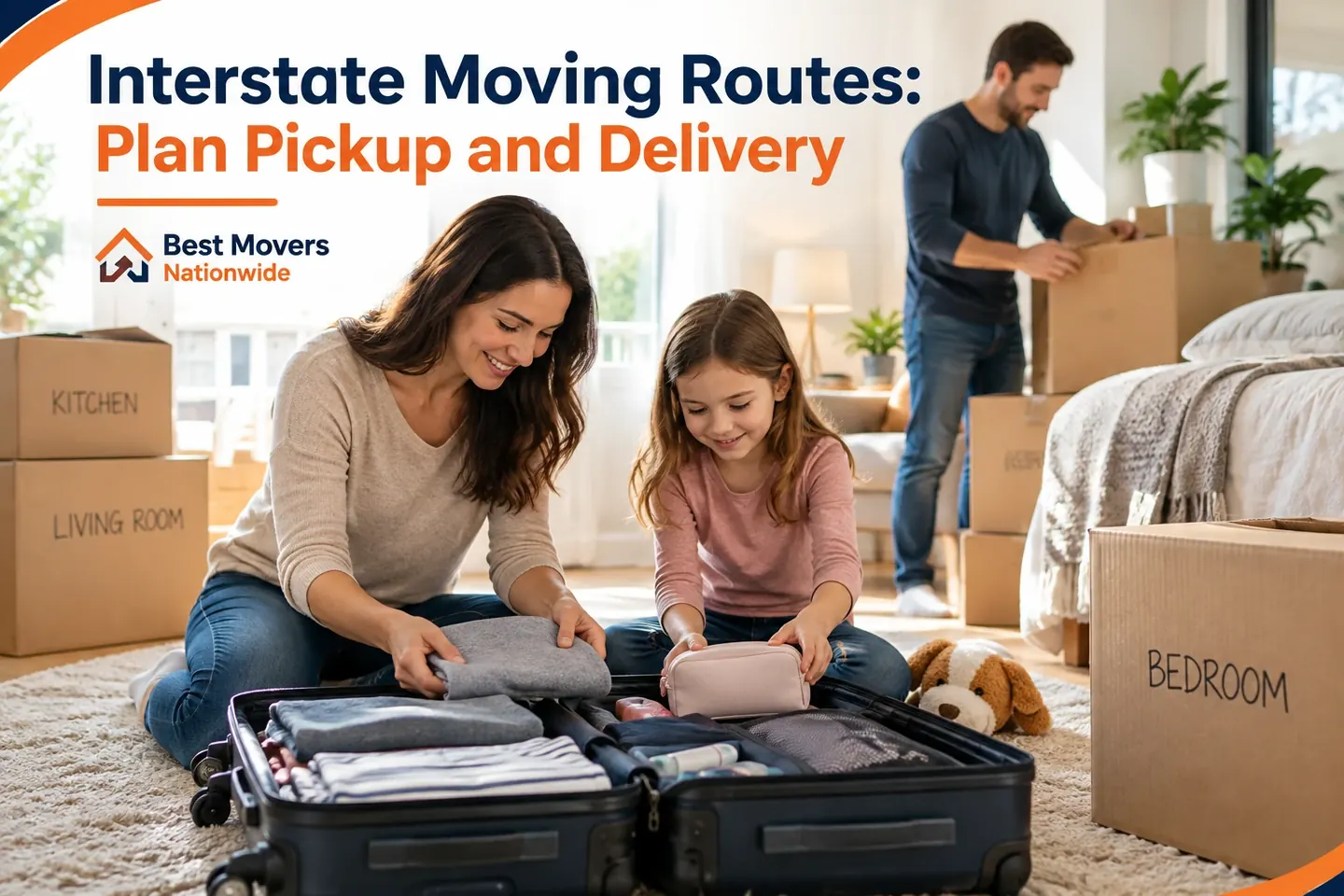
Interstate moving routes require two complete plans: one for the address you are leaving and another for the place receiving your belongings. Highway distance is only part of the arrangement.
Inventory, vehicle access, permitted building hours, storage, and delivery commitments all deserve attention before you choose a provider. Best Movers Nationwide offers route education and lead-generation information; it is not the carrier or moving broker and does not guarantee service on a corridor.
Describe interstate moving routes and every stop
Give origin and destination ZIP codes and the actual pickup locations. A route with an extra storage-unit pickup is different from a single-address move. Tell providers about secondary stops and ask whether the written estimate includes them before comparing totals.
Separate pickup from delivery
Record the deadline to leave your current property and the date your destination becomes available. Ask for written pickup and delivery terms, including notice procedures. A confirmed departure date is not proof of an exact arrival date; arrange travel and essentials accordingly.
Plan dense urban pickups
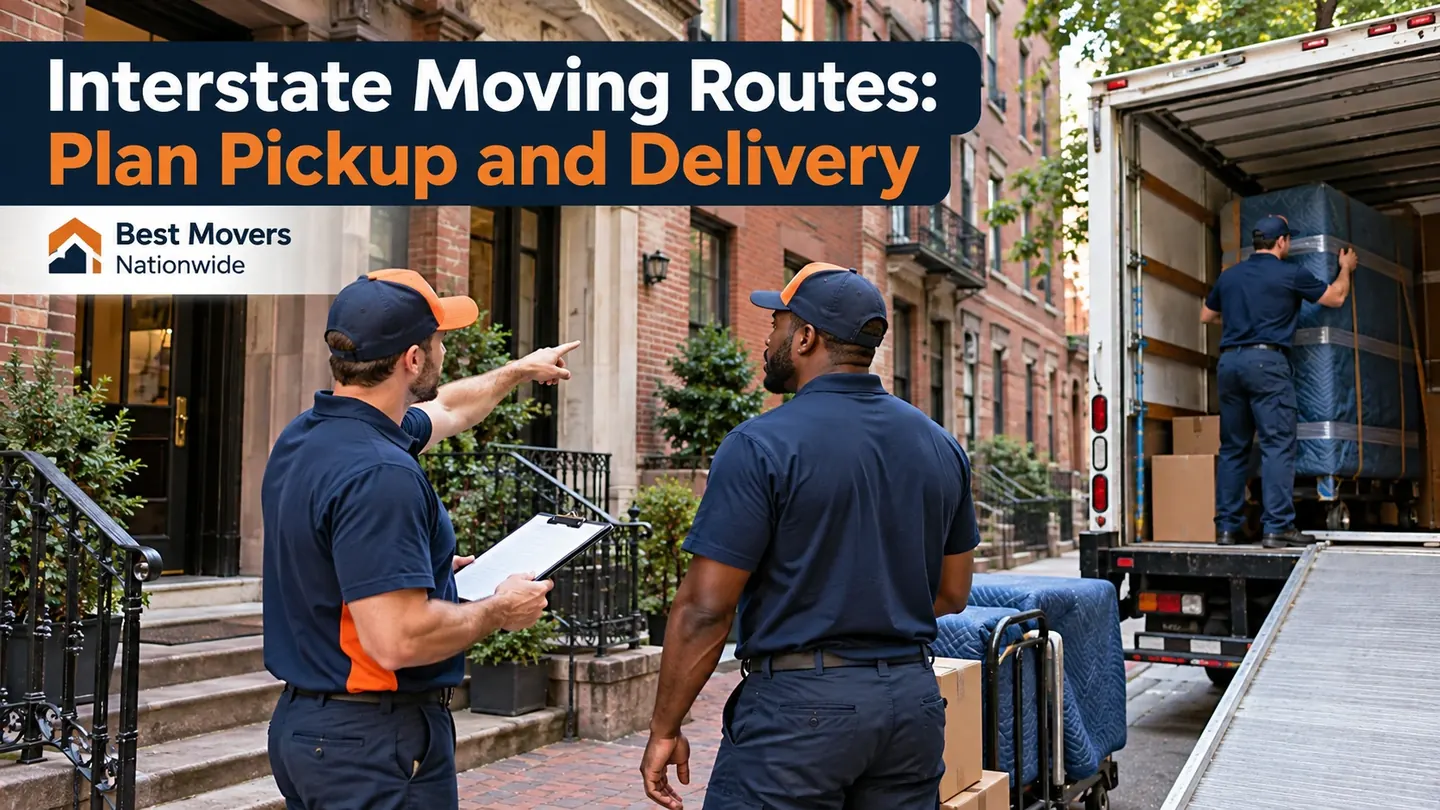
Boston-area narrow streets and multifamily buildings illustrate why access deserves a separate check. Ask the property manager about loading space, moving hours, elevator reservations, and certificates. Verify any municipal parking requirements with the relevant authority rather than assuming the provider handles all permits.
Plan high-rise destinations
Miami-area condominiums can involve managed loading areas and scheduled elevator use. Confirm the destination building’s requirements and give them to each provider. Ask what happens if the delivery window and elevator reservation do not align, including waiting, storage, or redelivery terms.
Check suburban and rural access
A Nashville-area driveway or a CSRA property may have grade, gate, or vehicle-access limitations. Send clear photos or measurements when needed. Ask whether the transportation vehicle can reach the entrance and whether any smaller-vehicle transfer would create an additional charge.
Clarify dedicated or shared transport
Ask whether the provider proposes a dedicated vehicle or a shipment carried with other customers’ goods. Discuss potential transfers, handling, updates, and delivery terms. Do not assume that one service model always guarantees faster arrival; rely on the actual written commitment.

Coordinate weather and travel
Discuss weather contingencies for the regions involved. Keep medication, identification, chargers, and first-night items with you. Plan a way to reach the provider during travel. Do not leave all essential supplies dependent on the shipment arriving before your first night.
Resolve storage before dispatch
If the destination is not ready, compare storage and redelivery terms before pickup. Identify who holds the goods and how inventories are tracked. Ask about accessing items during storage and the notice required for destination delivery. A flexible route still needs clear responsibilities.
Verify the transporting business
Ask for the company that will actually perform interstate transportation. Match the legal name and relevant federal records to the agreement. Use official consumer resources and keep the written documents. A route page, directory listing, or familiar brand does not itself verify authority.
Compare corridor proposals
Use identical inventory, access, stops, date requirements, and requested services. Record each provider’s written answers in the long-distance moving quote comparison worksheet, with a separate row for every pickup, delivery and access condition. Ask each provider to explain assumptions that may change. Choose a proposal that supports both pickup and delivery needs, rather than evaluating only highway mileage or an attractive starting price.
Ten practical checks before you commit
- Describe the complete corridor: Give origin and destination ZIP codes and the actual pickup locations.
- Separate pickup from delivery: Record the deadline to leave your current property and the date your destination becomes available.
- Plan dense urban pickups: Boston-area narrow streets and multifamily buildings illustrate why access deserves a separate check.
- Plan high-rise destinations: Miami-area condominiums can involve managed loading areas and scheduled elevator use.
- Check suburban and rural access: A Nashville-area driveway or a CSRA property may have grade, gate, or vehicle-access limitations.
- Clarify dedicated or shared transport: Ask whether the provider proposes a dedicated vehicle or a shipment carried with other customers’ goods.
- Coordinate weather and travel: Discuss weather contingencies for the regions involved.
- Resolve storage before dispatch: If the destination is not ready, compare storage and redelivery terms before pickup.
- Verify the transporting business: Ask for the company that will actually perform interstate transportation.
- Compare corridor proposals: Use identical inventory, access, stops, date requirements, and requested services.
Make an arrival plan that works without the shipment
Prepare for the first stage at the destination even if the truck arrives later than your own travel. Arrange essential sleeping supplies, medication, identification, basic clothing, chargers, and the information needed to enter the property. Confirm who can receive the shipment if your travel schedule changes and whether the provider permits that arrangement.
Share the destination contact and building restrictions directly with the chosen provider. When a property manager must supervise the loading area, coordinate the appointment rather than assuming your travel itinerary reserves it. Keep important documents available outside packed cartons. A good route plan explains how the household, property access, and shipment will meet; it does not depend on a casual estimate of driving time alone.
Build a corridor brief for both ends
Describe an interstate route as a complete pickup and delivery problem, not just two city names. Record both ZIP codes, any additional stops, the inventory, and each property’s access conditions. Include stairs, building appointments, gate instructions, loading areas, and vehicle-to-door distances where known. A clear corridor brief gives the chosen provider information to assess the work at both ends.
For a Boston-area origin, explain the actual street and building restrictions rather than assuming every neighborhood has the same access. For a Miami-area destination, confirm the particular condominium’s moving rules instead of relying on a general description of high-rise moves.
Nashville and CSRA addresses also vary: a downtown loading area and a rural driveway can require different planning. These examples illustrate questions to ask; they are not promises of route availability or claims that this website operates trucks on those corridors. Each independent provider must assess your specific locations and confirm its proposed service.
Keep household travel separate from shipment timing
Prepare your own travel plan alongside the provider’s written pickup and delivery terms. Decide what you must carry personally to live comfortably before the shipment arrives. Keep medication, identification, keys, chargers, clothing, and important documents accessible. If children, pets, or other household members have separate travel arrangements, coordinate who can enter the destination and who can answer delivery questions.
Ask the provider about its notification process and the contact responsible for timing updates. Do not translate a road-distance estimate into a promised arrival date. Stops, operating arrangements, access appointments, and other conditions may affect the plan the provider offers.
If someone else will receive the goods, confirm whether the company permits that arrangement and what authorization it needs. Your itinerary should support the written service plan while allowing you to manage essentials independently. This resource helps you organize questions but does not track or dispatch an independent company’s shipment.
Describe every stop before accepting service
If belongings are divided between a home, storage unit, office, or relative’s property, give the provider the full stop list. Record the inventory at each stop, its hours of access, and who can open the location. Explain whether items must be delivered to more than one destination. Do not assume a route proposal based on one pickup and one delivery also includes additional addresses.
Ask how the provider will document the stop sequence and any related charges or conditions. If a storage facility has elevator rules or limits on vehicle access, provide those details as well. Keep belongings organized by origin and destination so the shipment assessment is easier to follow.
When a stop is added or removed after the initial estimate, notify the company and ask for the appropriate written revision. A complete route request reduces ambiguity about where work will take place and how the proposed transportation arrangement fits the actual shipment.
Discuss property delays before pickup
A destination that is not ready can change the route plan. If a closing, lease start, renovation, or building reservation is uncertain, disclose that uncertainty during assessment. Ask the provider what options it offers if delivery cannot occur as originally discussed.
Request details about storage location, handling, access to goods, notice requirements, and redelivery arrangements. Review which business would hold the goods and which agreement covers that part of the service.
Keep a household contingency plan for essential items and temporary accommodation. A storage arrangement may resolve shipment timing but does not automatically resolve where your household will stay. Avoid accepting vague assurances that a delay will be handled without understanding the process.
When the destination becomes available, notify the responsible company using its stated channel and retain the response. Best Movers Nationwide cannot approve delivery changes or coordinate a provider’s storage. Direct those operational requests to the company responsible under your agreement.
Confirm the actual company for the route
A route description on a website is a research starting point. Ask any business offering interstate transportation to identify the legal company that will perform the work and explain its role. Review that identity against the agreement and appropriate official records. If another company is involved, ask what it does and which party is responsible for communication, handling, and payment. Do not substitute a familiar brand name for understanding the actual arrangement.
Compare proposals using the same corridor brief, including stops, inventory, dates, access, and requested services. Ask which timing and service statements are commitments and which remain estimates. Keep the answers with the documents before selecting a provider.
This page does not guarantee a truck, recommend an unverified operator, or establish an interstate booking. Its purpose is to help you prepare a complete route request and evaluate independent responses. The chosen provider must confirm availability, credentials, written terms, and responsibility for your specific interstate move.
Keep Planning Your Interstate Route
Route planning connects to timing, storage and packing. Explore related guides.
- Nationwide Moving Quotes
- Compare Nationwide Moving Quotes: 10 Smart Checks
- Long-Distance Moving Companies
- Cross-Country Moving Companies
- Residential Interstate Movers
- Packing Services for Interstate Moves
- Moving Storage for Long-Distance Moves
- Interstate Moving Guide: 10 Proven Planning Steps
- Moving Day Checklist
Official Resources Before You Move
Use these official resources to verify a mover, understand your rights as a household shipper and forward your mail.
- FMCSA Protect Your Move — federal rights and responsibilities for interstate moves
- FMCSA Company Snapshot — look up a mover by USDOT number before you book
- Better Business Bureau — check complaint history for any mover
- USPS Official Change of Address — forward your mail to the new home
Frequently asked questions
Does this page promise a truck on my route?
No. Each independent provider must confirm its availability and terms.
Is Best Movers Nationwide an interstate broker?
No. It is a discovery and lead-generation resource, not a carrier or moving broker.
Does the return direction cost the same?
Do not assume so. Ask providers to price the actual origin, destination, dates, and shipment.
Can I request a delivery date?
State the requirement; the provider must confirm whether and how it can meet it.
What is a delivery window?
It is the written range or timing arrangement agreed with the provider. Ask how notice and changes work.
Who books an elevator?
Confirm responsibility with the building and provider and record the reservation details.
Can a narrow street change the service?
It may require a different access plan. Disclose it early and ask for written charges.
Should I carry essentials personally?
Keep medication, identification, important documents, and immediate travel necessities with you.
What if move-in is delayed?
Ask about storage, notice, handling, and redelivery before committing.
How do I start a route request?
Provide the corridor, inventory, dates, access, stops, and services through the existing quote form.
Helpful next steps
Nationwide moving services · Free moving quote · Moving costs · How moving quotes work · FMCSA Protect Your Move
Explore independent provider options through the existing free quote form. Questions about this resource: bessmoversnationwide1@gmail.com. Verify the selected provider’s service and agreement yourself.
Research the provider before you decide
Read our referral disclosure and privacy policy before sharing a request. For interstate provider research, use FMCSA steps to select a mover. Keep the agency’s Your Rights and Responsibilities When You Move handbook alongside the provider’s paperwork when reviewing estimates and service terms.
Best Movers Nationwide — moving discovery and quote comparison